Blog
Check the latest news from our group on this page
2026
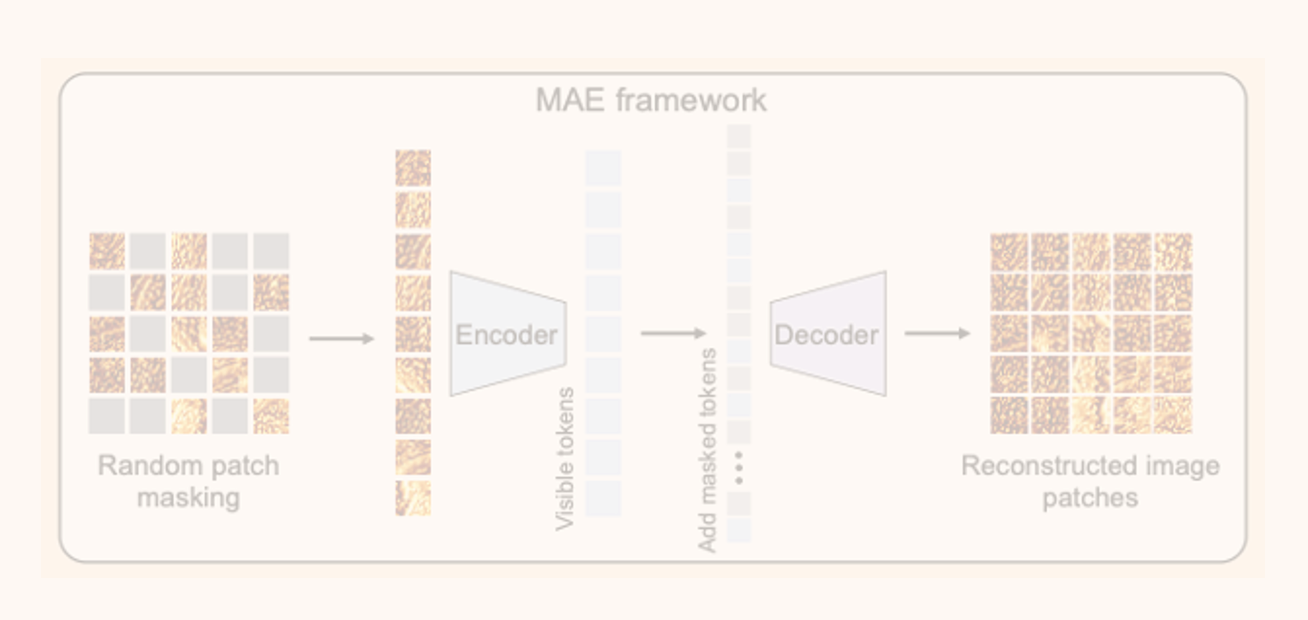
This project investigates stratum corneum nanotexture (SCN), the nanoscale topography of corneocyte surfaces, as a non-invasive digital biomarker of skin barrier integrity. We assembled a multicohort dataset comprising 24,968 atomic force microscopy images from 1,251 tape-strip samples collected from 651 participants across Denmark, Taiwan, and the Netherlands.
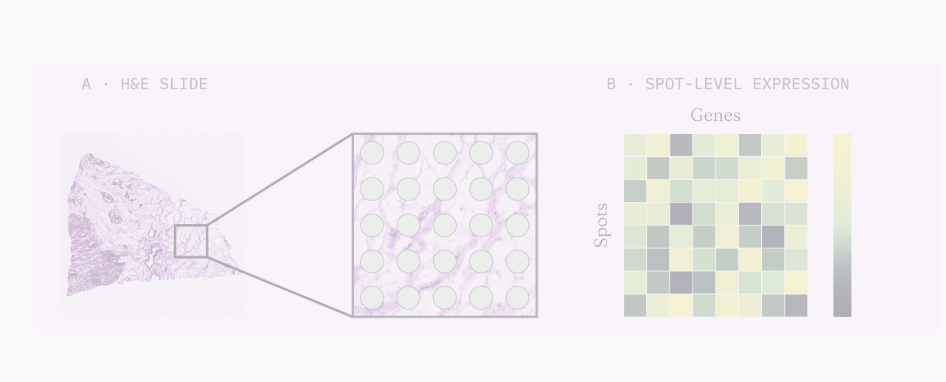
This PhD project explores how generative AI can connect tissue morphology with spatially resolved molecular measurements. Spatial transcriptomics provides complementary views of tissue through histology images and gene-expression profiles, but the relationship between these modalities is complex, noisy, and not fully deterministic. It is further complicated by measurement uncertainty, data sparsity, batch effects, and biological variation across tissues and patients.
We are excited to announce that a Digital Futures Flagship project, AI-Based 3D Spatial Cancer Biology, has been awarded to Gisele Miranda, Jens Lagergren, and Joakim Lundeberg. The project brings together expertise in artificial intelligence, computational modeling, spatial omics, and cancer biology to develop new methods for studying tumors as three-dimensional biological systems.
2025
Gisele Miranda and Avlant Nilsson (Karolinska Institutet - KI) have been awarded a grant through the Program for Academic Leaders in Life Science (PALS). PALS is a collaboration between the DDLS, SciLifeLab, and WCMM Fellow programs, co-funded by the Knut and Alice Wallenberg Foundation, with the goal of fostering new collaborations among early-career research leaders in Sweden.
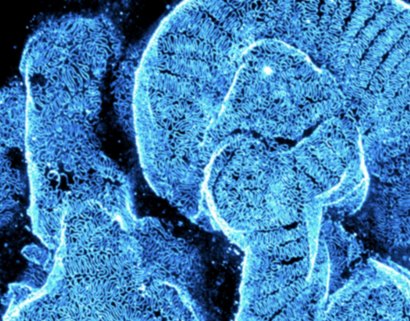
A Digital Futures Demonstrator project has been awarded to Hans Blom and Gisele Miranda.
We are excited to announce the approval of a new Research Data Community Project (RDCP), supported by SciLifeLab and the Wallenberg National Program for Data-Driven Life Science.
We are pleased to welcome Maximilian Senftleben to the BioImage Informatics Facility (BIIF) as a Bioimage Analyst.
We are delighted to welcome Jen-Hung Wang and Felipe Colombelli as PhD students in the lab.
2024
The Miranda Lab was officially established in September 2024. The lab focuses on developing machine learning methods for computational biology, with particular interests in image-based profiling, multimodal learning, and AI-driven biological discovery.